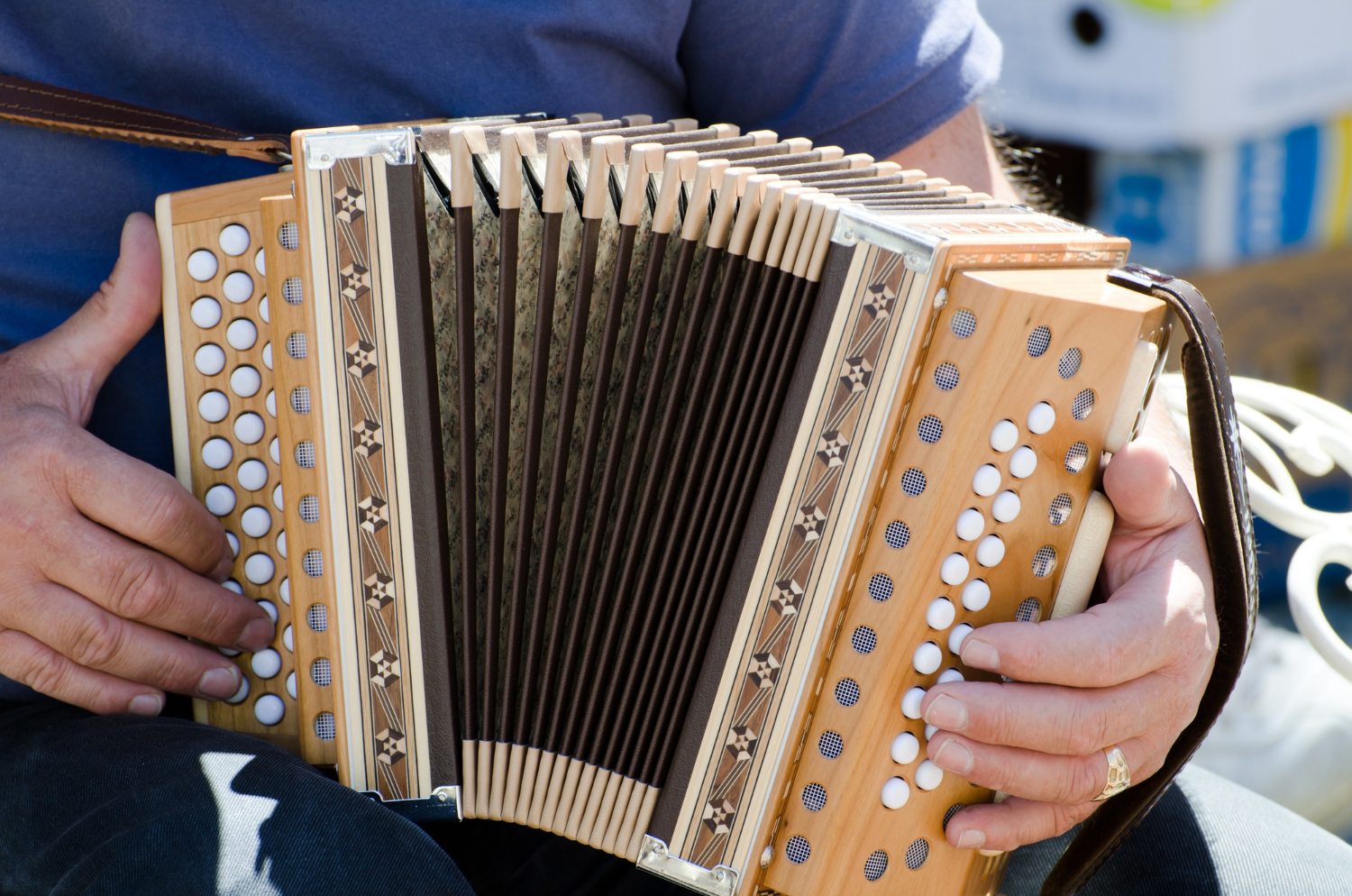





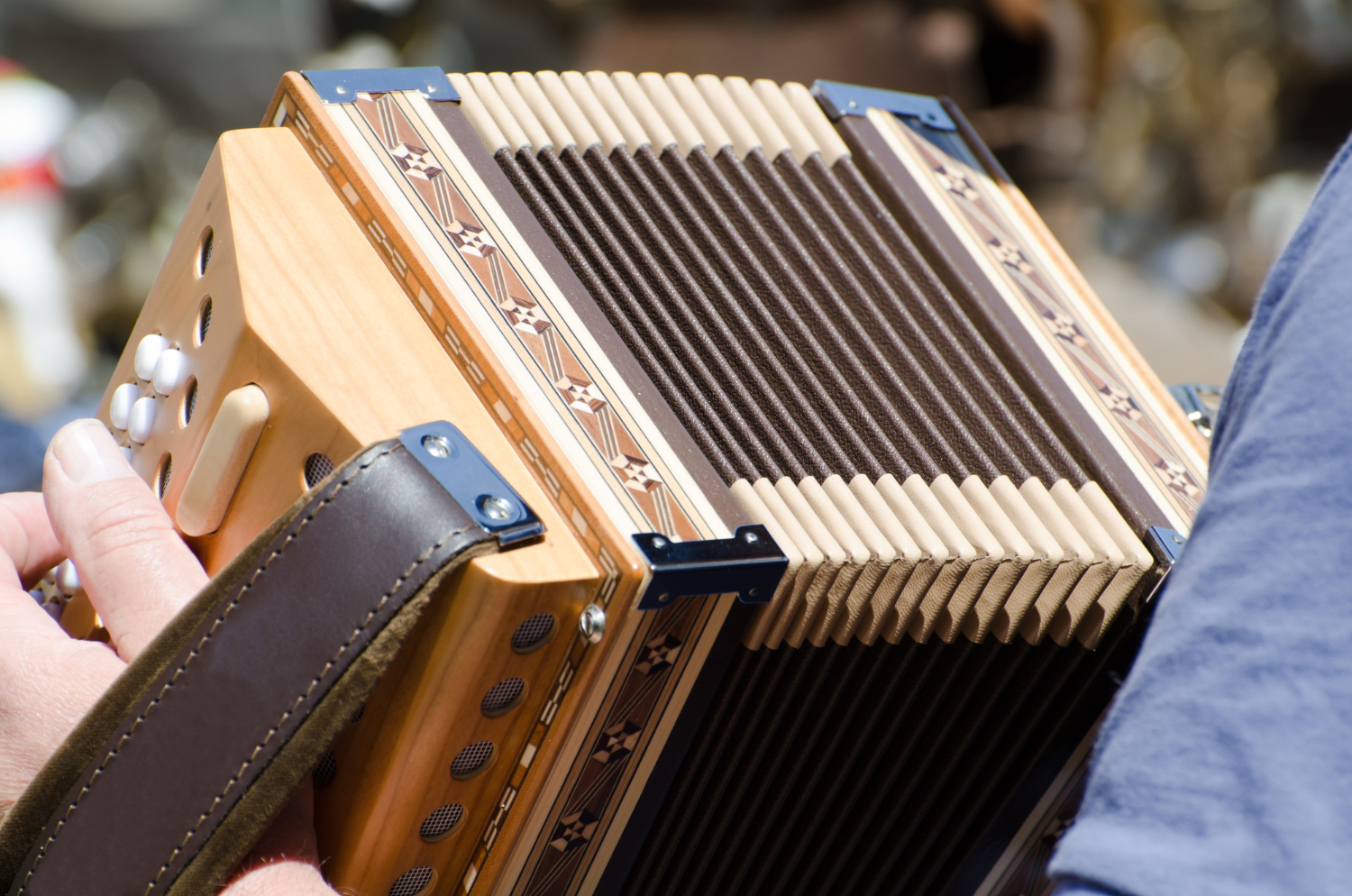
The concertina was a Victorian parlour instrument that nearly disappeared, survived in a handful of folk traditions, and has since turned into a tool producers reach for when they want something that sounds old and slightly uneasy. That is an unusual career, and it is worth tracing.
Where It Came From
Charles Wheatstone patented the English concertina in London in 1829, the same year Cyrill Demian patented the accordion in Vienna. Wheatstone designed a serious instrument with a chromatic layout, and for a while it had its own concert repertoire and respectable audiences.
The Anglo system, with two notes per button, came later and went the other way. It was cheaper, it suited dance music, and it ended up in the hands of working musicians rather than drawing rooms.
The Long Decline
Popular taste moved on, and the piano accordion took over the ground the concertina had held. By the mid twentieth century it survived mainly in Irish traditional music, in English Morris and country dance, in South African boeremusiek and among sailors and Salvation Army bands. Makers closed. Instruments became scarce.
The Folk Revival
The revivals of the 1960s and 1970s brought it back, and Irish music in particular gave it a permanent home. A generation of players treated the Anglo concertina as a serious melodic instrument, with its own ornaments and its own approach to rhythm, which is largely how it is played today.
Why Producers Started Using It
Its sound has qualities that are hard to get any other way.
- It reads as old. The timbre carries the nineteenth century with it, which is why it turns up in period scoring, maritime settings and anything meant to feel pre industrial.
- It is small and reedy. Thinner than an accordion, so it cuts through a mix without filling it. Useful where an accordion would be too much.
- It breathes audibly. The bellows noise and the slight instability of the reeds give it a human quality that sits well under dialogue.
- It can sound wrong on purpose. Played slowly or detuned it becomes unsettling, which is why it appears in horror and folk horror scoring.
How It Is Handled in the Studio
Close miking catches the reeds and the mechanical noise, which is usually what you want, and a second microphone further back picks up the body. Because the sound comes out of both ends, two microphones are standard and the stereo image is part of the character.
Sampled concertinas exist and are improving, though they face the same limit as sampled accordions. The bellows are the expression, so a library without a continuous controller mapped to volume will sound static no matter how good the recordings are.
Where It Stands
Still a small instrument with a small world of players, and still made by a handful of workshops with long waiting lists. But it has gone from nearly obsolete to permanently useful, which is more than most Victorian inventions managed.