





Concertinas and accordions both make sound by pushing air across free reeds with a bellows. That is where the similarity ends. They are held differently, laid out differently, and suit different music. If you are choosing between them, these are the differences that matter.
Shape and How You Hold It
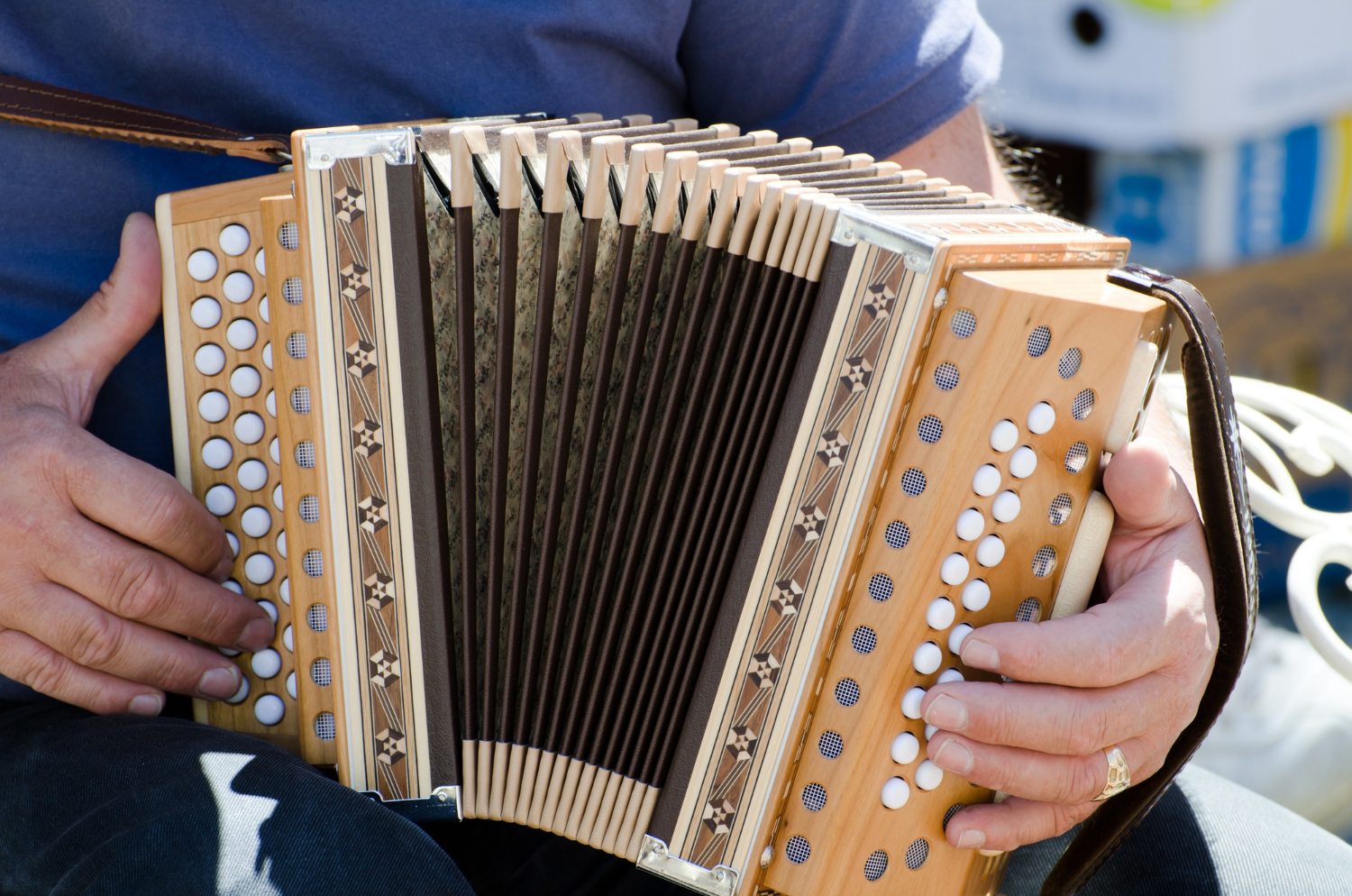
An accordion has a bellows in the middle with a keyboard or button board facing you on the right and a bass board on the left. It hangs from shoulder straps and its weight rests on your body.
A concertina is usually hexagonal and much smaller. The buttons sit on the flat ends rather than facing you, and your hands go through straps on those ends. You hold the whole instrument in the air and work the bellows by moving your hands apart and together.
The Big One: Bass Side or Not
This is the difference that decides what you can play. An accordion has a dedicated bass side, with bass notes and preset chords under the left hand. One player covers melody and accompaniment.
A concertina has no bass side. Both ends carry notes of the same kind. Depending on the system you either play melody only, or split melody and harmony between your hands yourself. That is more work and it gives you more control over the harmony.
The Systems
Concertina
- Anglo: each button gives two notes, one pushing and one pulling. Bouncy and rhythmic. Standard in Irish traditional music.
- English: the same note in both directions, melody spread across both hands. Smooth and suited to long lines.
- Duet: low notes on the left, high on the right, so one player can manage melody and accompaniment.
Accordion
- Piano accordion: a piano keyboard on the right. The easiest start for a pianist.
- Diatonic button: two notes per button, like the Anglo concertina. Cajun, norteno and Irish music.
- Chromatic button: every note available, same pitch both directions. The Russian bayan and most classical writing.
Size, Weight and Volume
A concertina typically weighs between one and two kilograms. A full size piano accordion can pass ten. If you play standing for hours, that gap decides the question on its own. The accordion is also considerably louder, because it has more reeds and a larger body.
Which Should a Beginner Choose
- Irish traditional music: Anglo concertina or a two row diatonic accordion.
- Cajun, zydeco, norteno: diatonic accordion. The concertina is not used in these styles.
- Classical or jazz: chromatic button accordion, or piano accordion if you already play piano.
- English and Morris tunes: English concertina or melodeon.
- You want to accompany yourself singing: accordion, because the bass side does it for you.
One Practical Warning
Good concertinas are expensive and cheap ones are often unplayable, with slow reeds that will not respond at speed. Entry level accordions are far more forgiving. Whichever you pick, have the reeds and valves checked before buying second hand.

One thought on “Concertina vs. Accordion: Key Differences Explained for Beginners”